HEALTHY LIVING – A SIMPLE WAY TO STAY FIT AND HAPPY
Healthy living is all about making small daily choices that keep your body and mind strong. Eating nutritious foods like fruits, vegetables, millets, whole grains, and home-cooked meals helps reduce the risk of lifestyle diseases such as diabetes, high blood pressure, and heart problems. Using safe cooking utensils like stainless steel or cast iron and avoiding damaged cookware can also support better health. Getting 7–8 hours of quality sleep, staying physically active, managing stress through relaxation or meditation, and reducing the use of plastic in daily life are simple habits that make a big difference. A healthy lifestyle not only helps prevent illness but also improves energy, happiness, and overall well-being for people of all ages.
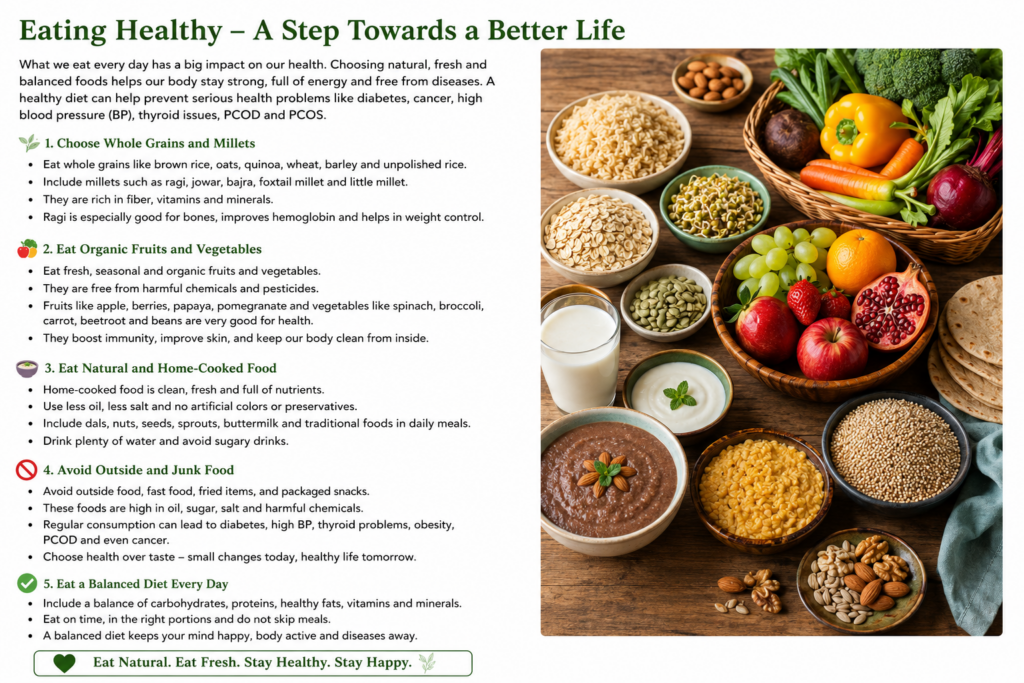
1. EATING HEALTHY-Healthy Living Starts with Healthy Food
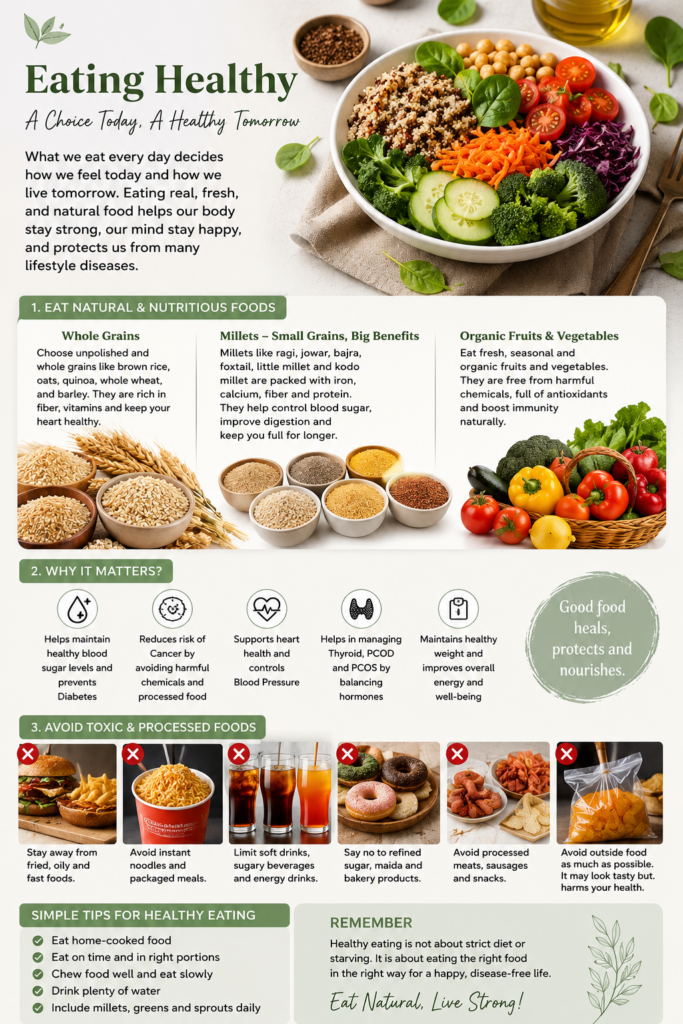
Eating healthy is one of the most effective ways to improve your overall health and reduce the risk of many chronic diseases. A balanced diet that includes whole grains, millets, fresh organic fruits, vegetables, pulses, nuts, seeds, and traditional foods like ragi provides the body with essential vitamins, minerals, fiber, and antioxidants. These nutrients help strengthen the immune system, improve digestion, maintain a healthy weight, and provide long-lasting energy. Healthy Living Starts with Healthy Food.
Whole grains such as brown rice, whole wheat, oats, barley, and quinoa, along with nutritious millets like ragi (finger millet), jowar, bajra, foxtail millet, little millet, and kodo millet, are rich in fiber and complex carbohydrates. They help regulate blood sugar levels, improve heart health, and keep you full for longer. Ragi is especially beneficial because it is rich in calcium, iron, and dietary fiber, making it an excellent choice for children, adults, and pregnant women.
Eating a variety of organic fruits and fresh vegetables every day provides natural antioxidants, vitamins A, C, E, potassium, and folate that help protect the body from illness. Leafy greens, carrots, tomatoes, cucumbers, berries, citrus fruits, apples, guava, papaya, and seasonal fruits support healthy skin, improve digestion, boost immunity, and contribute to overall well-being.
Including protein-rich foods such as lentils, chickpeas, green gram, kidney beans, soybeans, eggs, dairy products, fish, and lean meat (if consumed) helps build muscles, repair body tissues, and maintain good health. Healthy fats from nuts, seeds, and cold-pressed oils support brain function and heart health.
Limiting processed foods, sugary drinks, deep-fried snacks, packaged foods, refined flour products, and excessive fast food is equally important. Regular consumption of unhealthy foods may contribute to weight gain and increase the risk of lifestyle-related diseases. While no single food can completely prevent diseases, a healthy diet combined with regular exercise, good sleep, and routine medical check-ups can lower the risk of conditions such as:
- Type 2 diabetes
- High blood pressure (hypertension)
- Heart disease
- Obesity
- Polycystic Ovary Syndrome (PCOS)
- Polycystic Ovarian Disease (PCOD)
- Certain types of cancer
- Some thyroid-related health issues (diet supports overall health but does not prevent all thyroid disorders)
Drinking enough water, avoiding smoking and excessive alcohol, staying physically active, managing stress, and sleeping for 7–9 hours every night further support a healthy lifestyle.
Conclusion
Healthy eating is not a short-term diet but a lifelong habit. Choosing wholesome foods like grains, millets, ragi, fresh fruits, vegetables, pulses, and natural ingredients while reducing outside and highly processed foods helps nourish the body, maintain a healthy weight, improve immunity, and support long-term wellness. Small, consistent healthy choices every day can make a significant difference in your overall quality of life.
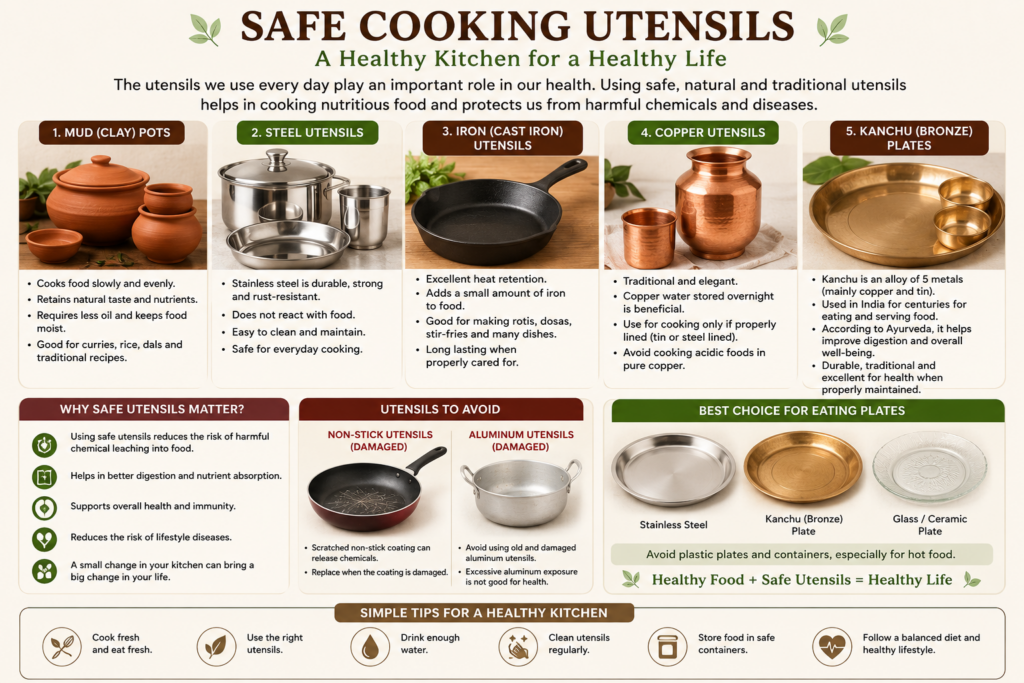
2. SAFE COOKING UTENSILS-Healthy Living Begins with Safe Cooking Practices
The utensils we use every day play an important role in preparing safe and healthy food. Choosing cookware made from mud (clay) pots, stainless steel, cast iron, and copper can be a good option for everyday cooking when they are used and maintained properly. Clay pots help retain moisture and enhance the natural taste of food, while cast iron cookware can add a small amount of iron to meals. Stainless steel is durable, easy to clean, and widely recommended for daily use. Copper utensils are traditionally valued for storing water, but they should be used correctly and not for cooking acidic foods unless they are properly lined. Healthy Living Begins with Safe Cooking Practices
On the other hand, old, scratched non-stick cookware and damaged aluminum utensils should be replaced when worn out, as damaged surfaces may affect food quality. Using good-quality plates and containers made from staineless steel, glass, or ceramic is also a safer choice for serving food compared to low-quality plastic. Along with eating fresh, nutritious food, choosing safe cooking utensils helps support a healthier lifestyle and reduces unnecessary exposure to unwanted substances.
Healthy food + Safe cookware = A healthier family.
a. Clay (Mud) Pots
Clay pots are one of the oldest and healthiest ways to cook food. They cook food slowly, helping it retain its natural taste, moisture, and nutrients. Because clay pots distribute heat evenly, they require less oil and help prevent food from burning. Many families still prefer clay pots for preparing curries, rice, and traditional recipes.
b. Stainless Steel Utensils
Stainless steel is one of the safest materials for daily cooking. It is strong, rust-resistant, easy to clean, and does not react with most foods. Good-quality stainless steel utensils are suitable for preparing vegetables, rice, dals, and many other dishes. They are a reliable choice for every kitchen.
c. Cast Iron Utensils
Cast iron cookware is well known for its strength and excellent heat retention. Cooking in cast iron may add a small amount of iron to food, which can be helpful for some people with low iron levels. It is especially useful for making rotis, dosas, stir-fries, and other traditional dishes. Proper seasoning helps cast iron last for many years.
d. Copper Utensils
Copper has been valued in traditional households for centuries. Many people use copper vessels to store drinking water overnight. If used for cooking, copper utensils should be properly lined with stainless steel or tin because pure copper can react with acidic foods. With proper care, copper utensils can be a beautiful and useful addition to the kitchen.
e. Kanchu (Bronze) Plates
Kanchu, also known as bronze or bell metal, is a traditional alloy mainly made from copper and tin. In many Indian households, Kanchu plates and bowls have been used for serving meals for generations. They are valued for their durability, elegant appearance, and cultural importance. According to Ayurveda, eating food in Kanchu utensils is believed to support digestion and overall well-being. While modern scientific evidence for specific health benefits is limited, Kanchu plates remain a safe and durable choice when they are made from food-grade materials and properly maintained. Many families continue this tradition because it combines cultural heritage with mindful eating.
f. Wooden Utensils-A Natural and Safe Choice for Cooking
Wooden utensils have been used in kitchens for centuries and are still one of the safest choices for cooking and serving food. They are made from natural materials and do not react with food, making them suitable for stirring, mixing, and serving hot dishes. Unlike metal spoons, wooden utensils do not scratch cookware, helping pots and pans last longer. They are also lightweight, comfortable to use, and do not conduct heat, making them safer to handle while cooking.
Good-quality wooden spoons and spatulas are free from harmful coatings and are a better alternative to low-quality plastic utensils that may release unwanted chemicals when exposed to high temperatures. To keep wooden utensils safe and hygienic, wash them with mild soap, dry them completely after use, and replace them if they become cracked or damaged. Choosing natural wooden utensils is a simple step towards creating a healthier and eco-friendly kitchen.
Benefits of Wooden Utensils
- Made from natural and eco-friendly materials.
- Do not react with food during cooking.
- Safe for stirring hot foods and serving meals.
- Do not scratch cookware like non-stick pans.
- Comfortable to hold and do not become hot quickly.
- Reusable, durable, and environmentally friendly when properly maintained.
Tip: Choose wooden utensils made from good-quality hardwoods such as neem, teak, beech, or bamboo, and avoid painted or chemically coated wooden utensils for everyday cooking.
Avoid Damaged Cookware
Old or scratched non-stick cookware should be replaced because damaged coatings can reduce cooking quality. Similarly, heavily worn or damaged aluminum utensils should not be used. For serving food, choose stainless steel, glass, ceramic, or quality bronze plates instead of low-quality plastic containers, especially for hot foods.
3. Reduce Plastic Use-Healthy Living Through Eco-Friendly Daily Habits
Plastic has become a part of our daily lives, but using too much plastic can affect both our health and the environment. Many people carry groceries in plastic bags, drink tea or coffee in plastic-coated paper cups, and store hot food in plastic containers. When plastic is exposed to heat or used repeatedly, it may release harmful chemicals into food and drinks. Reducing plastic use is a simple habit that can help you live a cleaner and healthier life.
One of the easiest ways to reduce plastic is by carrying jute bags or stitched cloth bags while shopping. These bags are strong, reusable, and environmentally friendly. Unlike plastic bags, they can be used many times without creating unnecessary waste. Keeping a cloth bag in your handbag, backpack, or vehicle makes shopping easier and helps reduce plastic pollution.
Instead of using plastic water bottles every day, choose stainless steel, copper, or glass bottles. These are durable, reusable, and safer for daily use. For storing food, use glass, stainless steel, or ceramic containers instead of plastic, especially for hot meals. This simple change helps keep your food fresh while reducing exposure to unnecessary chemicals.
Avoid accepting plastic straws, disposable plastic spoons, forks, and cups whenever possible. If you buy tea or coffee, carry your own reusable cup or choose shops that serve beverages in steel, glass, or ceramic cups. Small habits like these can greatly reduce single-use plastic waste.
Reducing plastic is not only good for your health but also for nature. Plastic waste pollutes rivers, oceans, and farmland, harming birds, animals, and marine life. By choosing reusable products, you help protect the environment for future generations.
Every small step matters. Carrying a cloth bag, using reusable bottles, avoiding plastic packaging, and choosing eco-friendly alternatives are simple habits that create a healthier home and a cleaner planet. Healthy living is not just about eating nutritious food—it is also about making smart choices that protect both your body and the environment.
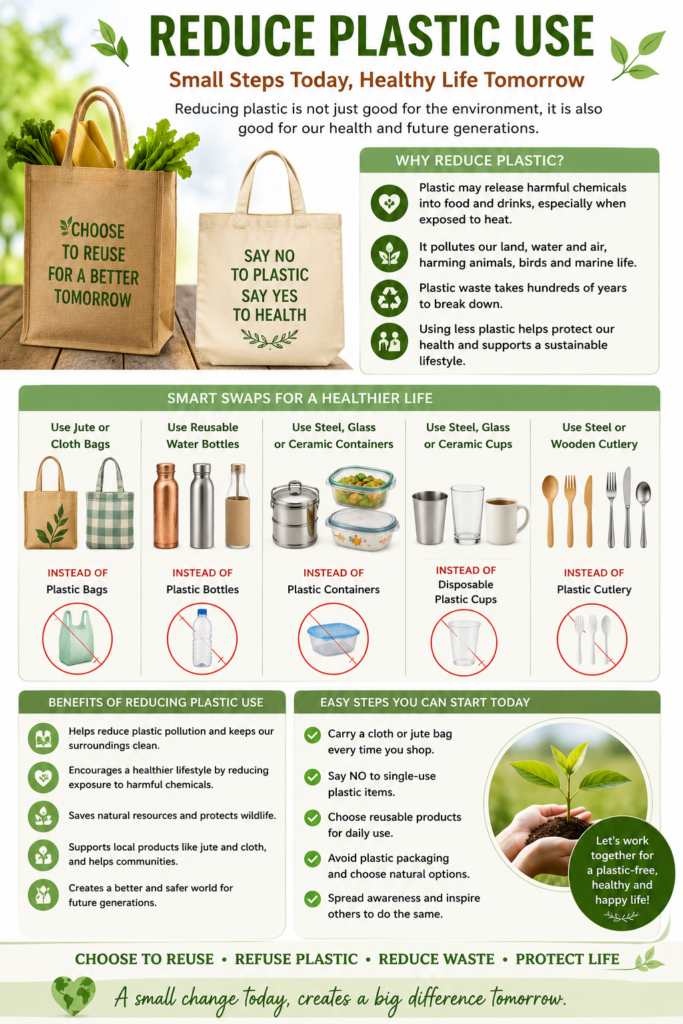
Benefits of Reducing Plastic Use
- Helps reduce plastic pollution.
- Encourages a cleaner and healthier environment.
- Promotes the use of reusable and eco-friendly products.
- Reduces unnecessary plastic waste at home.
- Supports a sustainable lifestyle for future generations.
- Creates healthy daily habits for the whole family.
Remember: Choose a cloth bag today, protect your health tomorrow, and help build a greener future for everyone.
4. Healthy Sleep and Daily Routine-Healthy Living Starts with Quality Sleep
A good night’s sleep is one of the most important parts of a healthy lifestyle. Our body repairs itself while we sleep, giving us the energy we need for the next day. Adults should aim for 7–9 hours of quality sleep every night. Try to sleep and wake up at the same time every day, even on weekends. A regular sleep schedule helps your body follow its natural clock, improving both physical and mental health. Healthy Living Through Daily Physical Activity
Avoid using mobile phones, laptops, or watching television for at least 30–60 minutes before bedtime. The blue light from screens can make it harder to fall asleep. Instead, spend your evening reading a book, listening to calming music, practicing meditation, or enjoying quiet family time. Eating a light dinner before 7:30 PM and avoiding tea, coffee, or heavy meals late at night can also improve sleep quality. Healthy Living Through Daily Physical Activity
Good sleep helps improve memory, strengthens the immune system, reduces stress, and lowers the risk of lifestyle diseases such as obesity, diabetes, and high blood pressure. When you sleep well, you wake up feeling fresh, active, and ready to start the day.
Benefits of Healthy Sleep for healthy life
- Helps the body repair and recover.
- Improves memory and concentration.
- Strengthens the immune system.
- Reduces stress and improves mood.
- Supports heart health and overall well-being.
- Helps maintain a healthy body weight.
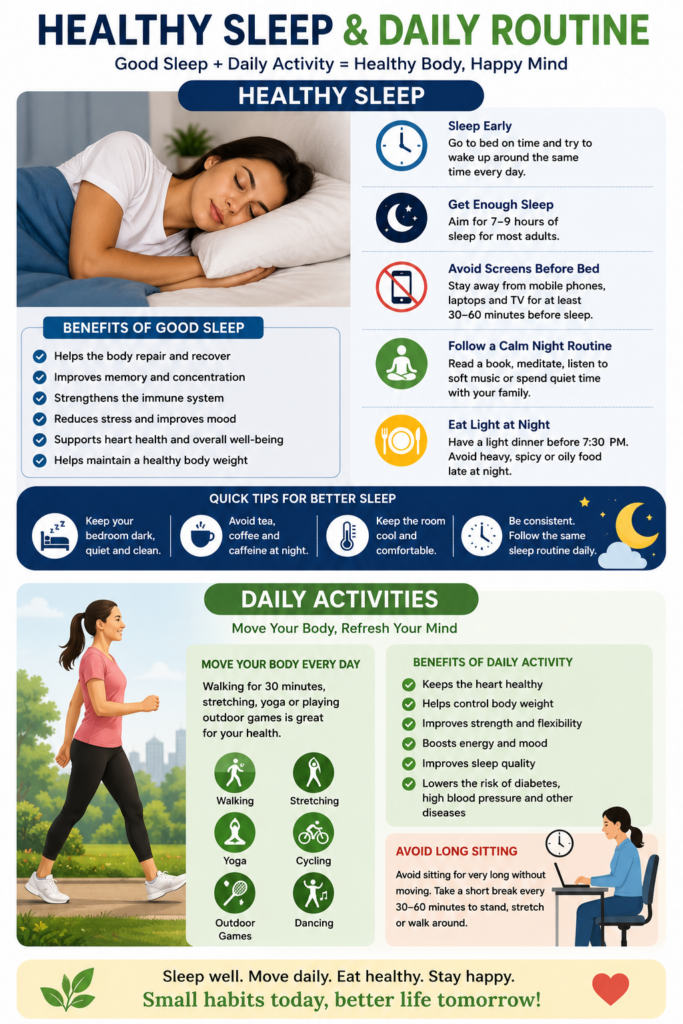
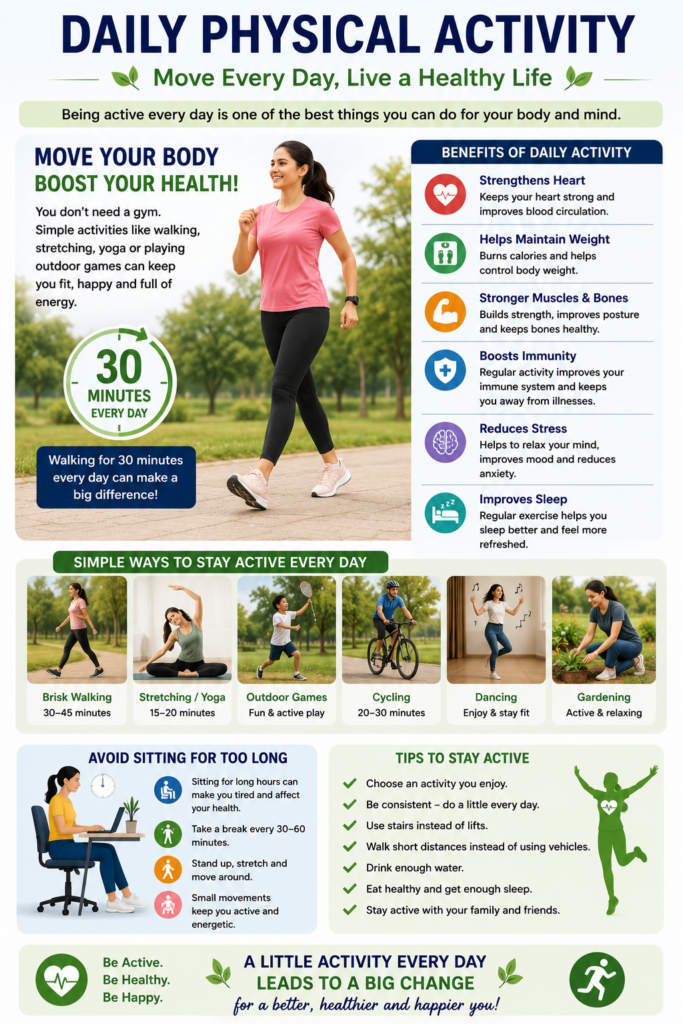
5.Daily Physical Activity-Healthy Living Through Daily Physical Activity
Regular physical activity is one of the easiest ways to stay healthy and prevent many lifestyle diseases. You do not need a gym to stay fit. Simple activities like walking for 30–45 minutes, cycling, stretching, yoga, gardening, dancing, or playing outdoor games can keep your body active and your mind refreshed.
If you work or study for long hours, avoid sitting continuously. Take a short break every 30–60 minutes to stand up, stretch, or walk around. Small movements throughout the day help improve blood circulation and reduce tiredness. Children should spend time playing outdoors instead of sitting with mobile phones or television for long hours.
Regular exercise helps control body weight, improves heart health, strengthens muscles and bones, and supports healthy blood sugar levels. It also reduces stress, improves sleep, and boosts confidence. Along with healthy eating and good sleep, daily physical activity is one of the best habits for living a long and healthy life.
Benefits of Daily Physical Activity
- Keeps the heart healthy and strong.
- Helps control body weight naturally.
- Improves blood circulation and flexibility.
- Strengthens muscles and bones.
- Reduces stress and increases energy.
- Lowers the risk of diabetes, high blood pressure, and other lifestyle diseases.
Healthy Tip: Sleep well, move your body every day, eat healthy food, and manage stress. These simple habits can help you enjoy a healthier, happier, and more active life.